
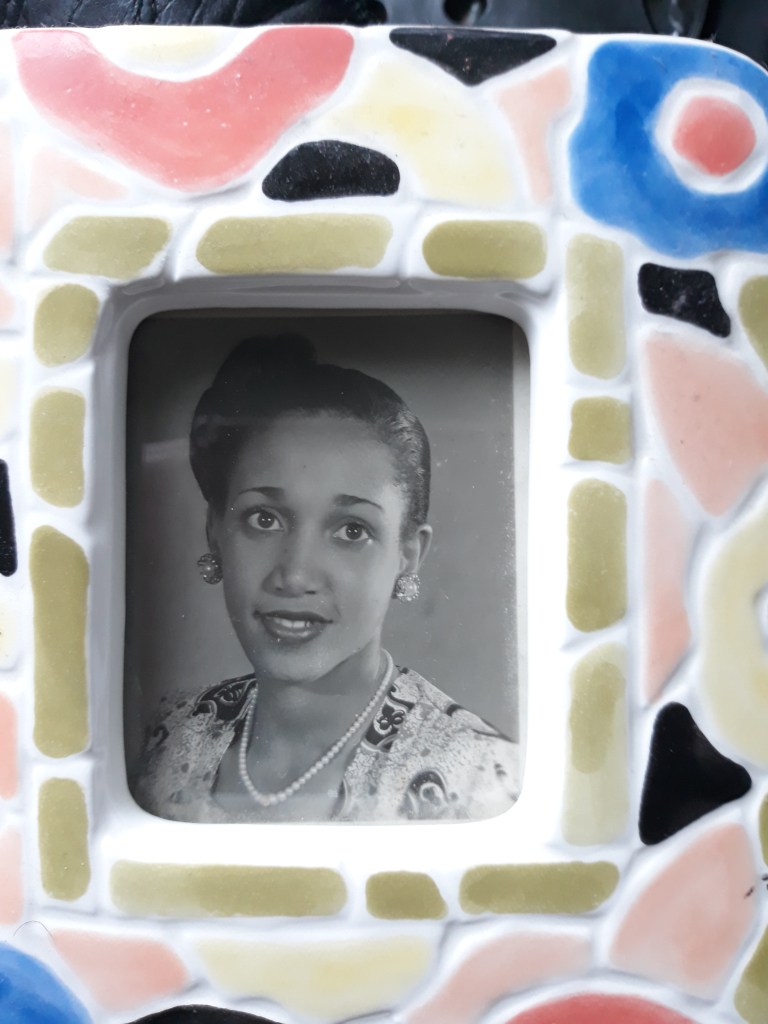
Above is a photo of my mom when she was about fifteen years old. A while back, I toyed around with writing a profile about my mom. The following is a snapshot of different parts of her life in short story form.
“Teresa!”
Her face burned with embarrassment as she jammed her index finger to her lip, eyes fixed on the little boy. He understood. She pulled his hand as they both crept quietly behind the billowing curtains. She had secretly been taking care of him for six months now. Her younger sister had been covering for her. They were in the second-floor sunroom that extended out into a small balcony. She peered around the curtain and spotted her father. He was in his work clothes.
“Teresa!!!” He called louder now, glancing up at the balcony. Her breath caught as she flattened herself against the wall. She was one of seven starving children, two older sisters, two older brothers, and one younger sister. Her mother died when she was four years old, leaving her father to care for them all. With the boys, he gave them all the freedom, they could work with him or come and go as they pleased. Not so with the girls. He did not understand that they needed bras and sanitary napkins. Teresa needed many things. She needed her teeth fixed. She needed her own clothes instead of her older sister’s tattered donations.
“Senora! Please send my daughter out. She has to come home.” The little boy looked up at Teresa, but she shook her head no. He kept still. Her little sister must have given in and told him where she was. She felt betrayed. Her little sister with whom she shared a bed and fought over the bedsheet each night causing their father to come in and settle matters between them. She strengthened her grip on the little boy’s hand.
Now she heard the click clack heals of the lady of the house. Teresa’s heart fell. As she approached the balcony, Teresa ran up to her waving her arms not tell her father.
“Hello? What is all this commotion, Manolo?” the lady of the house called from the second-floor balcony.
“My daughter, I know she is there. Tell her to come home.”
“Manolo, be reasonable. We can use her help. She’s very good with our son. She needs things. Let her make her own money. She can live here and come home on the weekends. She’s 13 already.”
“No! She has everything she needs at home. She does not need to be working.” He stood firmly looking up at the lady of the house. She retreated inside.
“Teresa, I’m sorry, I’m going to have to let you go. When you are a bit older you can come back.”
“Please, can I stay, Senora? I don’t want to go home.” Teresa began to cry.
“I know. There’s nothing I can do.” She embraced her.
She didn’t understand. Her younger sister never told on her before. When her father left early in the morning for work, he would lock the gate behind him so she and her sisters would not get out. However, Teresa would jump the fence and look for tornillos (screws) to sell. She always wanted to be independent and not have to rely on the meagre meals of beans her father brought home. All of her brothers and sisters and even some of the neighbors knew she did this, but they did not tell.
Her oldest sister, Andrea was like a second mother to all her siblings. She was in charge of cooking everyone breakfast, providing there was something to eat. Teresa’s brothers would always try to eat up everything first without leaving anything for anyone else. If you were not there when that meal was served, you did not eat. There was no such thing as “I will save this for later.” There was no such thing as leftovers. However, they did have a goat.
One morning, Manolo left them all very early to go to work. There was nothing for them to eat and they were hungry. Teresa, being only eight years old at the time was determined to milk the goat. Despite being warned by Andrea, she grabbed the bucket and went out in the back yard to milk the goat. She had watched her father and older brothers do it and thought it was easy. She approached the goat from behind and sat on the stool. The goat, sensing her inexperience looked back at her and the next thing she knew, she felt the air whiz by her cheek. She fell over. A half of a centimeter closer, and the goat would have gotten her good. Teresa was only eight years old at the time.
Teresa’s desperate plea for independence started at a young age, followed her into her marriage which brought her to the United States in the mid-1950s. There was a millionaire family that sponsored Teresa and her husband to come to the United States. Teresa and her husband, Victor applied for visa in order to leave as a revolution was beginning against Batista. They left just before Castro took power. The husband of this family was in the oil business at the time. They lived in a rich suburb in New Jersey. Following the advice of friends who also did the same, Teresa decided to leave her three-year-old son in Cuba while she worked in America. When the lady of the house discovered this, she sent for him.
Teresa was no stranger to live in help. She was a nanny for a short time in Cuba. She quickly learned what they expected and was happy to provide it. She could barely speak the language herself, yet she could understand when spoken to. She realized that the English she was taught in school was not the English people spoke in the United States. Her husband was more adept in the language department. He would occasionally mix up the words, for example, Mrs. Stanton, was “Mistress Stanton.” Mrs. Stanton was not offended because she knew there was a language barrier of sorts.
Teresa and her husband worked six days a week for miniscule pay, but they had room and board. On the weekends, they would go to New York with their friends who had also come from Cuba. After some time of saving money, Teresa wanted to go to the hairdresser. She did not know the word for this and being the independent spirit she is, she went out to seek this on her own. She would walk to the downtown area, and would motion to women she saw, pointing to her hair. Some looked at her like she was crazy. Yet somehow, a woman figured out what she was asking and sent her to a barber. Somehow, she was able to get her point across of what she needed.
Teresa was determined to learn English fluently. She would read aloud to the boys of the family at night, and they would correct her pronunciation. After some years, she went for her driver’s license. She told Mr. and Mrs. Stanton about her desire for this. “It’s okay if you don’t get it,” Mrs. Stanton said. Some weeks later after the driving lessons, Teresa took the test and passed.
When she returned to work that day, the Stantons asked her how things went. “I didn’t pass,” she lied.
“You see, I told you,” Mrs. Stanton said. Teresa could hardly contain herself.
“I got my new license!” She held it up for them to see.
“Congratulations Teresa, I’m so happy for you.” Mr. Stanton smiled. He was fond of Teresa’s spirit of determination. Perhaps he saw a part of himself in her.
Little by little, Teresa and her husband saved up enough money to buy a one family house a mile away. This house was not on “the hill” where there were mansions. This house was near the local high school and middle school. There was a municipal pool a quarter of a mile away. The house had a large backyard and front yard. Teresa and her husband converted it to be able to house a tenant. However, the hassles with getting the rent from them became problematic and eventually they converted it back to a one family.
Teresa always had a love for language and took evening classes at Liberty School for English as a second language. This class was also mandatory for her citizenship and naturalization. She had to renounce Cuba when she completed this process. She did not want to ever go back there as she did not have fond memories of it. She wound up writing an editorial article for the local newspaper that spoke about her love for language and the importance of continuing education. The library became her haven for knowledge. In later years, she worked for a Montessori school where she taught young, eager minds.
Now at the age of 92, she is experiencing memory loss and still remembers certain eras of her life vividly. She still loves to read and paint the occasional picture. She is loved deeply by her family.

 Vela Patria
I enjoyed this short story. Milking a goat would be difficult.
LikeLiked by 1 person